Why your team should play together and how to build a practice that makes it happen.
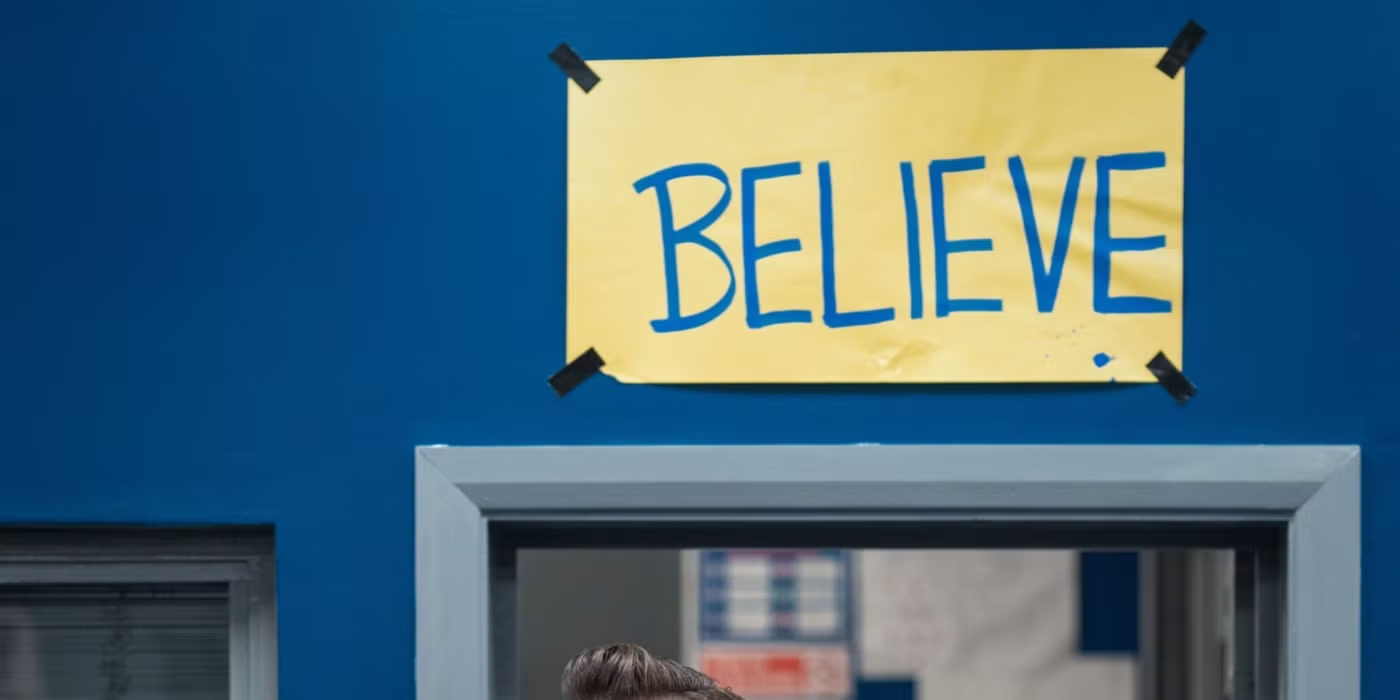
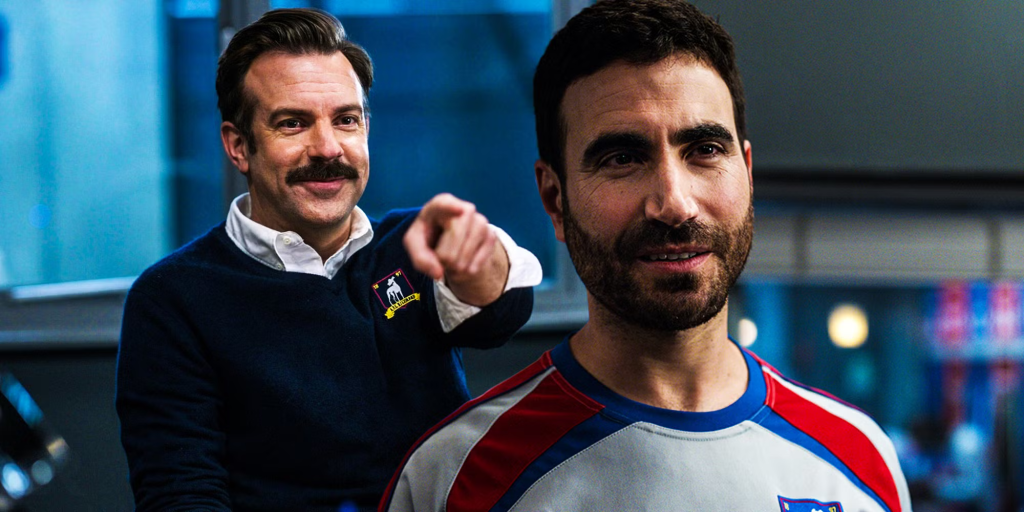
In 2020, Apple TV released a fictional show about an American football coach attempting to coach a UK soccer team to success. This man’s name is Ted Lasso, and despite the odds, Ted – an American college football coach who has never watched a single game of soccer in his life – becomes the best thing that ever happened to the AFC Richmond Football Club.
How, exactly, did he manage to turn a disconnected group into a high performing team?
While I haven’t been on many sports teams myself (I can count them all on one hand…), I have been on plenty of teams throughout my career, ranging from consulting teams to product and tech teams. I like to think that Ted and I have a shared understanding:
You can’t manufacture great team culture. You can’t demand it or enforce it. You can only create the ground that great teams grow from, and trust that the outcome follows.
A couple of years ago, I grieved for the great teams I had once been a part of. It’s hard to fall into a great team. On the surface, it seems like teams either click or don’t click, but my research took me deeper.
After a year of reflection, reading, and experimentation, I made a new discovery, one that I realized Ted was already intuitively putting into action…
The Party
In July 2025, I gathered 14 people to be a part of a small online community called The Party, a tip of the hat to D&D adventuring parties and game lobbies.
Inside The Party, we had software engineers, designers, product managers, a project manager, and even a general admin. People who, at first, didn’t know each other, who worked at different companies, but still had one thing in common – they spent most of their days isolated and disconnected from their working teams.
For 5 months, I hosted, facilitated, and played. I designed sessions and ran games, creating consistent, deliberate spaces for connection.
Every day, I posted questions as an easy way to practice self-awareness, creativity, vulnerability, and other soft skills; a chance to share and get to know more about folks, take a moment to be present, daydream, be silly, and connect with other party members.
Questions like:
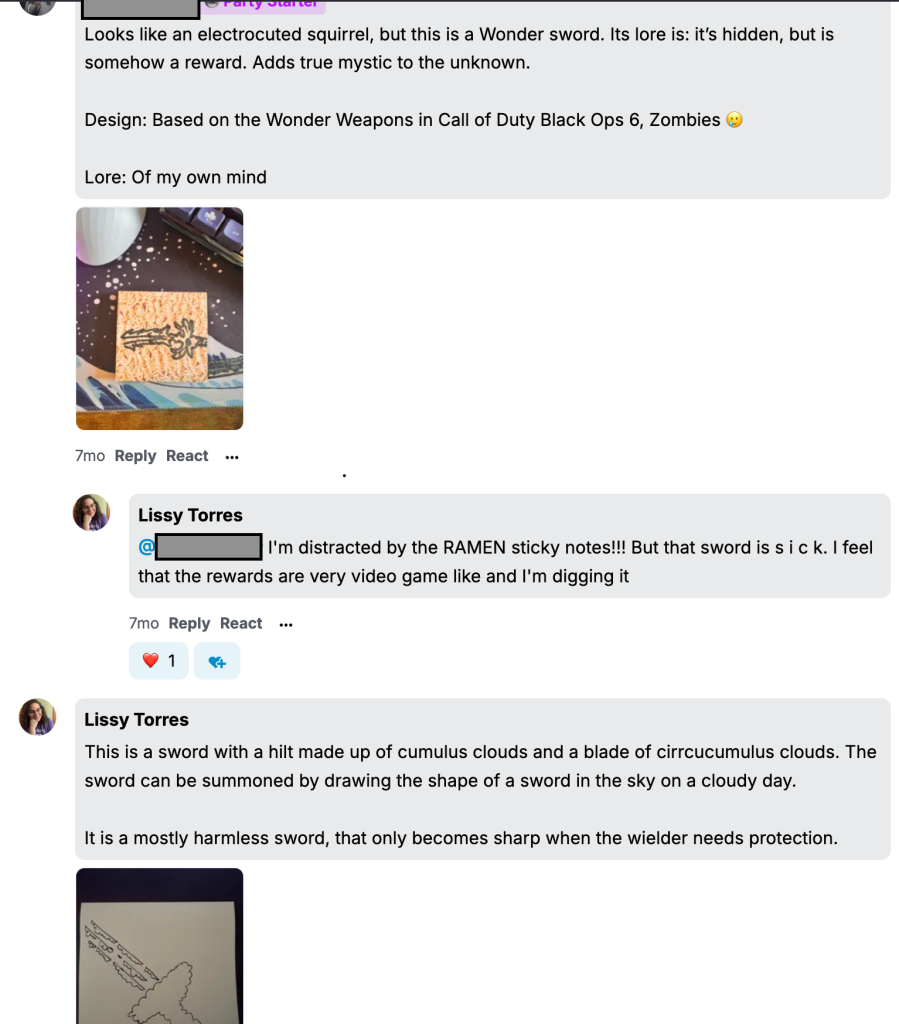
“Draw a fantasy sword using a post-it note. Tell us about its made-up background.”
“If your current project was a D&D character, what would it be?”
“Share your emoji mood for the week ahead.”
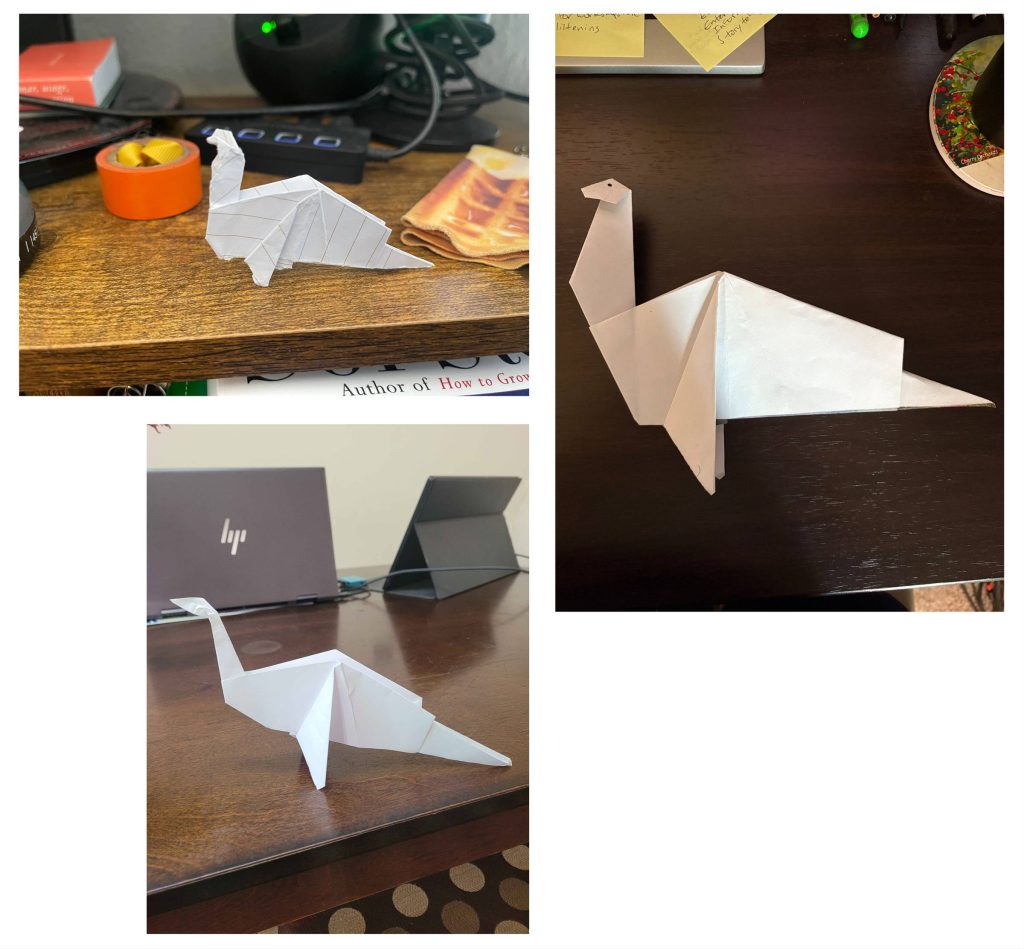
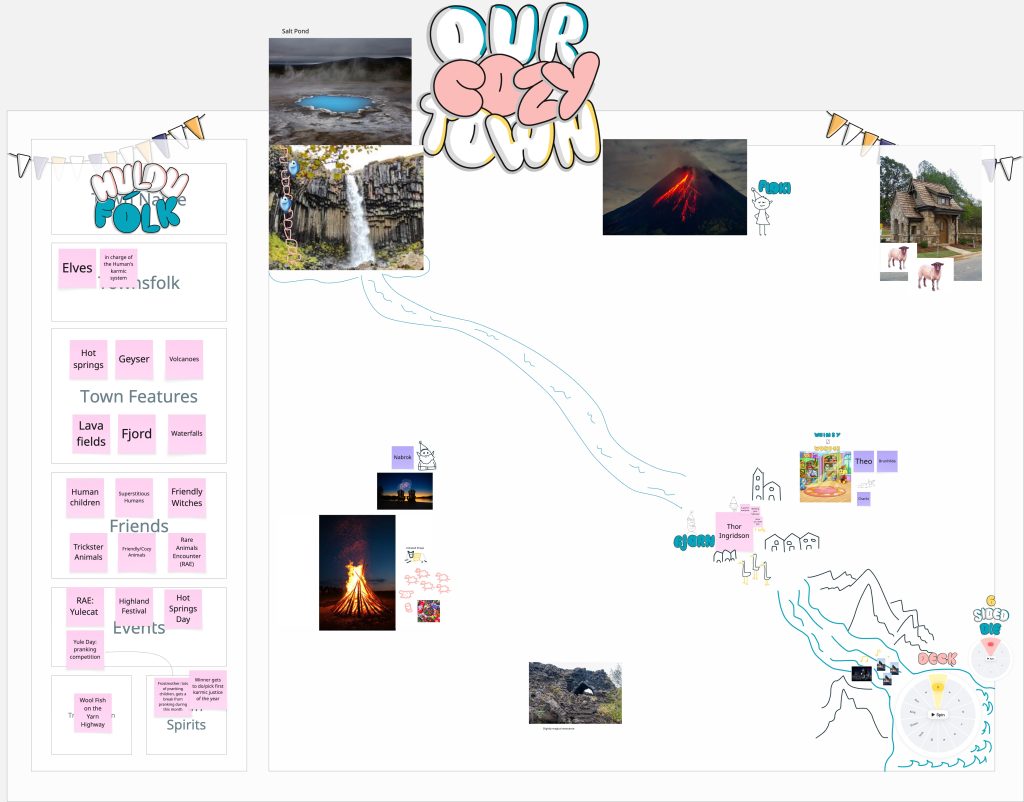
We read Our Hideous Progeny together and made origami plesiosaurs as part of our non-traditional book club (ask me about it!). We played Keep Talking and Nobody Explodes, a game that makes it practically impossible to not learn how to listen to and communicate with each other. We even cocreated a small world together, with a crazy cool yarn highway, in Cozy Town.
Every game and activity had a reason behind it. And boy oh boy, did we play a bunch of games!
So what happened?
After 5 months, I ran a survey to understand what results, if any, came out of all this goofing and playing around. Even though I went into the Party with a plan, the results surprised me!
On average, sense of connection went from 2.3 to 4.0 out of 5, a 74% improvement. Party members grew in 7 different soft skills, with 67% reporting improved empathy and active listening. 78% reported more energy at work and 70% felt less isolated.
100% said they would bring these methods to their own teams.
Wow! I had assumed there would be some improvement between these strangers but I was pretty floored by the outcomes. Now, the stats proved that my system worked but the testimonials describe why it worked:
“I really enjoyed the safe place built for communication and community. I liked having a place where others understood the struggles of working environments and allowed me to express them in ways that wouldn’t affect my job.”
“Connecting with others and feeling less isolated or lonely. I really only talk to my family throughout the workday. During work, it’s just me alone at my desk for most of the day. It was great to be able to take breaks and connect with others going through the same things.”
“Using play that is fun and not like usual boring team building stuff like ice breakers and chicken, dog, boat scenarios! Those things have their place but they are out of touch and boring and could use a revamping.”
“Focus was on the play, not my effectiveness or productivity. Felt safer to be a bit vulnerable.”
How I did it
How did I do it? In the end, we mostly just played a bunch of games, right? Well, what I learned from being an avid gamer, amateur game designer, fifteen years of watching teams form, and tons of existing research is that the conditions which great teams grow from aren’t mysterious; They’re SPACEcial.
Okay, terrible joke aside, I created a framework for these conditions that make “clicking” seem effortless. I call it the SPACE for Play framework, made up of 5 dimensions that teams can affect and build through play: Safety, Purpose, Autonomy, Care, and Enablement.
Let’s go through them.
Safety
Making space for vulnerability
In Ted Lasso, at a point where one of the players, Sam, makes a mistake, Ted asks “Do you know what the happiest animal on earth is? He goes on to say “A goldfish,” because of its 10 second memory span. This is Ted’s way of saying out loud that taking risks is okay, that trying and failing is a part of the process.
Most teams talk about psychological safety as a concept, but it’s a dimension that requires consistency and modeling vulnerability, the way Ted does. If you’ve seen the show, you know Ted models vulnerability a lot, which in turn, makes it safe for the team to be vulnerable, too.
Studies find that psychological safety in teams is linked to higher engagement, lower stress, and lower turnover. You want that, right? Play accelerates it through repeated experiences of being wrong and nothing catastrophic happening. We have a good laugh and we move on. It’s how we can show that this is truly a safe place to explore and experiment, not just something we wrote into company policy.
Purpose
Playful goals
This is what separates Ted’s coaching from the coaching of those that came before him. He doesn’t run drills for the sake of it. He doesn’t do what works for everyone else because he focuses on what’s best for the people in the room. The exercises are the vehicle and the people are the destination.
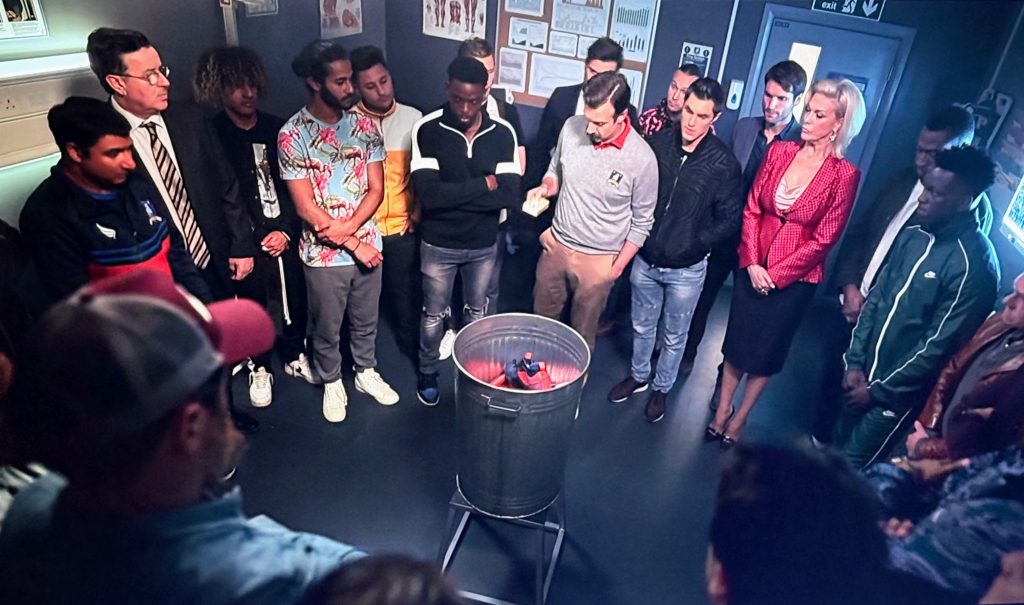
Play is the same way. Games and activities are picked based on specific team needs – trust building, energy, creative thinking, rebuilding connection after a tough sprint, etc. Without purpose, play is pleasant, something we all need, but with purpose, play is next level.
Autonomy
Choice makes engagement authentic
Back to Ted Lasso – do you remember Roy Kent? Gruff, furious, stubborn Roy Kent? Ted never forces him to be anything other than who he is. He makes space for Roy to be what he needs to be and trusts that Roy will find his way to what the team needs from him.
Mandatory enthusiasm and participation makes poor actors of us all. Nobody wants to be forced to have fun, connect when they don’t want to connect, or participate in ways that make them uncomfortable. In the Party, everyone was welcome however they showed up. This meant making space for active participation, observers, note takers, and so on! Differences in thinking styles, personalities, abilities, or culture is part of what makes teams great. Let them show up how they know how to show up and enrich your team.
Care
From coworkers to community
Care is the biscuits.
Every morning, Ted brings the boss a box of biscuits he baked himself. It becomes a near daily habit for Ted to reach out, care, and connect. It doesn’t always go right…but the point is that Ted’s making an attempt to learn more about Rebecca and say “I see you and you matter to me.”
Care is the practice of seeing your teammates as people and learning about what makes them them. Sometimes it’s just easier to focus on our work only and not try to see beyond our teammates’ job titles. Play creates openings that ordinary professional interactions usually don’t. When you watch a colleague defend the cursed backstory of their post-it sword with complete abandon, you learn something about who they are. That knowledge becomes relational capital that pays out slowly in ways like checking in on each other, leaning on one another, and celebrating accomplishments.
Enablement
Growth in other realms
The last dimension is enablement – the concept of using structured play to develop specific soft skills. In Ted terms, this means peeling back the layers and working on what’s underneath, helping players become better at being themselves, not just better at playing soccer.
In our terms, it’s about enabling the team to grow together. In his influential work from 1938, Homo Ludens: A Study of the Play-Element in Culture, Johan Huizinga established the concept of the magic circle, a space with its own rules that opens up whenever we enter play, allowing the suspension of disbelief and major consequences from the regular world.
In this circle, we can practice things that feel too risky in real life. Play creates a magic circle where teams can experiment with their own skills or team skills like communication, vulnerability, or conflict, without facing consequences. This muscle memory then transfers to the team’s work, which is what makes enablement so valuable.
Play is the point
Work teams are a lot like sports teams – we’re at the same place, online or offline, every day, and each one of us has a position to fill. The difference is that the love of the game is built into sports and Ted leans into that with playfulness.
Play is the way we practice being together, and it’s largely absent from the one place where people spend a lot of time together almost every day. Nearly ⅓ of our lives are spent working.
Can you recall a recent time when you played at work?
If you can, consider yourself lucky.
Enter Dr. Stuart Brown, founder of the National Institute of Play, who has spent fifty years studying play in humans and animals across cultures. He arrived at the conclusion that play is not a childhood behavior, but a deep seated need for healthy adults. Play deprivation in adults produces rigid thinking, emotional dysregulation, difficulty collaborating, and a creeping sense of isolation from the people around you.
Feels much like a description of modern day workplaces.
Why is that? Play is an innate primary process emotion, baked into how we fundamentally function. Many things funnel through play, like learning, discovery, and emotional regulation, so when we are deprived of play, research shows it can lead to depression, cynicism, and a lack of motivation. Dr. Brown sums it up best:
The opposite of play is not work — the opposite of play is depression.
We all have a little Ted Lasso inside of us
Let ‘em out! Ted didn’t wait around for the perfect team; he showed up for the one he had right in front of him.
Any team has the potential to be a great team. Feeling connection, safety, and joy are not just for the lucky ones. You can make it happen by weaving more play into your day to day and reaping the benefits of engagement, connection, and creativity.
That’s why I created SPACE for Play and founded Play at the Office (PATO) – to help teams anywhere start a play practice through small, consistent actions.
Great teams party up, with each person on their own path, traveling together, learning, stumbling, supporting each other, and celebrating the journey, side by side.
Get your party together with a play practice!
Start simple, one step at a time!
Try a 5 minute check in with your team
Open your next retro with simple improv
Good luck, have fun,
Lissy
—
Lissy Torres is a UX strategist, serious games designer, and facilitator who’s spent 15+ years integrating play into work. They created SPACE for Play from everything they learned on tech teams, validated it through The Party, a five-month experiment that helped 14 tech professionals improve connection by 74%. She runs PATO (Play at the Office) to bring that framework to teams everywhere.